Biodiversity Net Gain 2026: Architect's Guide + Free BNG Calculator
An England-focused guide to statutory biodiversity net gain, August 2026 exemptions and using a unit-uplift calculator without confusing arithmetic with compliance.
Quick answer
For development subject to England’s statutory biodiversity net gain regime, the biodiversity gain objective is generally at least 10%. Establish eligibility and the statutory habitat baseline first. Atlasly’s calculator compares biodiversity units entered by the user; it does not survey habitats, calculate the statutory metric or certify compliance.
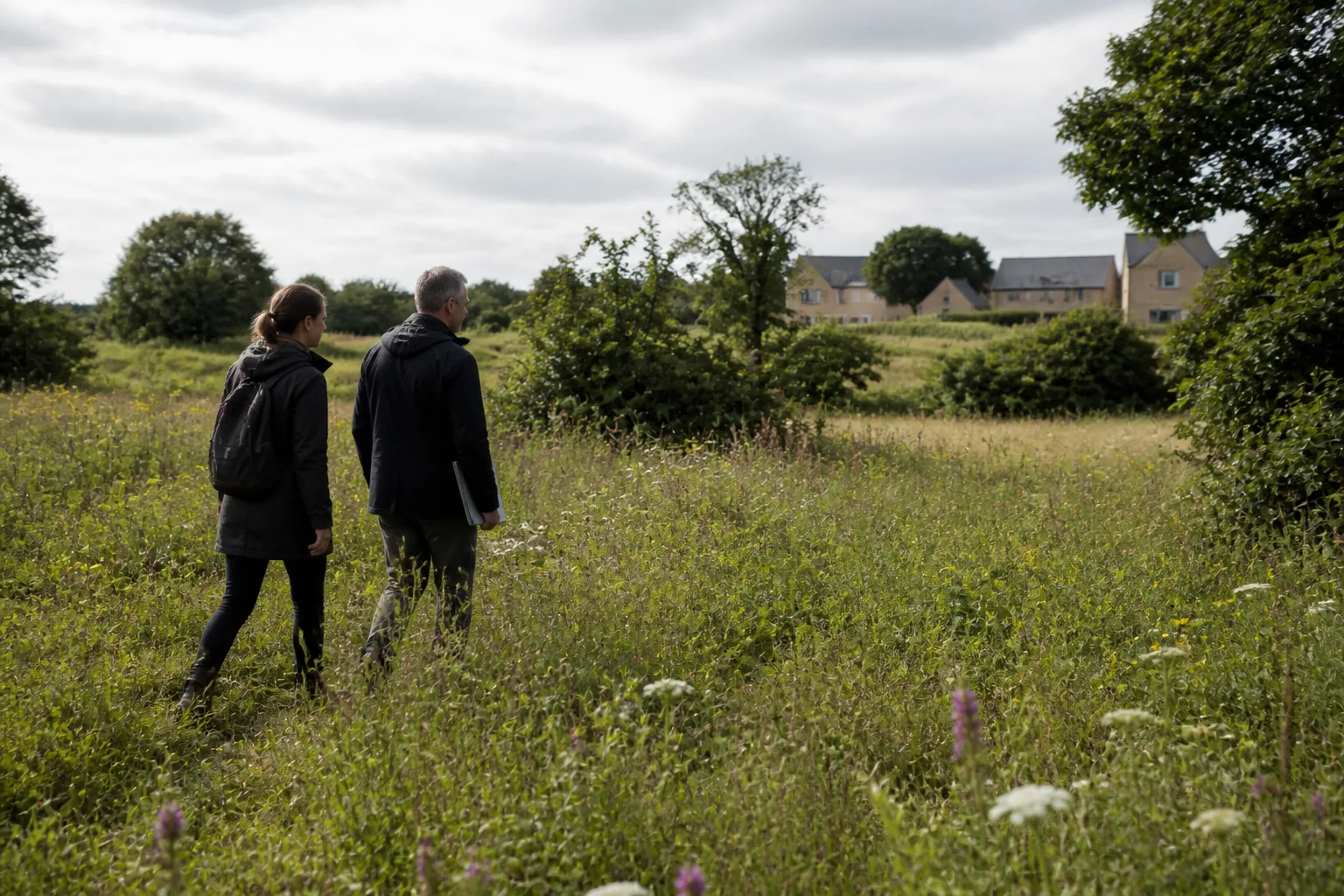
Biodiversity work starts with what is on the site and which requirements apply to the proposal. A landscape percentage or a green roof area is not enough to establish a statutory biodiversity result. This article separates exemption checks, the official metric and early design comparisons, using sources reviewed on 12 September 2026.
The Atlasly BNG calculator is an arithmetic aid for comparing a baseline and a proposed total expressed in the same biodiversity unit type. Obtain those values from the applicable official metric with appropriate ecology input.
Establish the applicable regime and date
Check the current exemptions before calculating. For relevant applications made on or after 6 August 2026, development on a site of 0.2 hectares or less is exempt only if it does not impact onsite priority habitat. The former self/custom-build exemption is limited by the transition date; do not keep applying the old nine-dwelling rule to new applications. Section 73 and other transitional cases need a separate check. Exemption from statutory BNG does not remove protected-species or other planning duties.
Use the statutory metric, not fixed habitat weights
The statutory biodiversity metric is distinct from the older Biodiversity Metric 4.0. Habitat type, condition and other inputs affect the result; delivery risks and trading rules matter too. Hedgerow, watercourse and area habitat units cannot simply be added together.
Do not assign all car parks one unit per hectare or all green roofs a fixed unit score. The earlier examples on this page used unsupported fixed weights and have been removed. Habitat classification and condition need suitable evidence; mapped land use alone is not a statutory habitat baseline.
What the Atlasly calculation means
Enter baseline and proposed units from the same applicable metric category. For a positive baseline, the arithmetic uplift is (proposed − baseline) ÷ baseline × 100. An illustrative baseline of 10 units and proposed total of 11 units gives 10% uplift. This example demonstrates arithmetic only.
A zero baseline needs separate handling; a percentage increase from zero is undefined. A result of 10% or more does not validate inputs, exemption eligibility, habitat trading rules, ecological feasibility, offsite registration or the biodiversity gain plan. Keep those checks outside this simple comparison.
Turn landscape options into an evidence trail
Ask the ecologist to identify retained habitats before drawing replacement landscaping. Test the location and long-term management of proposed planting, roofs, drainage features and habitat connections against the architecture, servicing and access strategy. A feature can have several design benefits without automatically attracting a particular number of biodiversity units.
Maintain an option table with habitat assumptions, metric version, area or length, proposed condition, delivery period, management responsibility and outstanding evidence. Mark unverified design assumptions clearly. Update the metric when the layout changes, rather than treating an early comparison as a permanent result.
Delivery, approval and long-term management
The biodiversity gain plan normally needs approval before development commences under the biodiversity gain condition; that is different from saying the complete plan must be approved before planning permission can be granted. Significant onsite enhancements and offsite gains have long-term securing requirements, generally at least 30 years. Not every planted feature has the same legal securing route.
Read the government explanation of delivery before assuming all sites must exhaust onsite delivery first: since 6 August 2026, qualifying non-exempt minor development can consider onsite and offsite gains together. Purchased offsite biodiversity units and government statutory credits are different mechanisms. Identify the route and evidence required, rather than labelling both as habitat-bank credits.
Illustrative example
Illustrative scenario: A team compares landscape options against a provisional habitat baseline, marks the assumptions and commissions the appropriate ecology input. A desktop calculator does not establish the statutory baseline or remove approval requirements.
Frequently asked
When did statutory BNG start?
The main commencement dates for England’s planning regime were 12 February 2024 for major development and 2 April 2024 for non-major development, with exemptions and transitional arrangements. The August 2026 changes require a fresh eligibility check.
Does the England regime cover the whole UK?
No. The statutory regime discussed here is for England. Other UK nations have their own biodiversity policies and duties.
Can a green roof contribute?
Potentially. Its contribution depends on the applicable metric classification, design, condition assumptions and delivery requirements. There is no universal units-per-hectare credit for every green roof.
Can Atlasly certify 10% BNG?
No. It compares the units you supply. A numerical uplift does not establish that the statutory metric, gain plan or delivery requirements have been satisfied.
Conclusion
Check eligibility, establish a credible baseline and use the statutory metric for the scheme. Use a simple unit comparison to discuss options, retaining the ecological and legal delivery checks needed to support the final proposal.

About the author
Shatakshi Patil
Architect writing about pre-construction due diligence, planning context, and site intelligence workflows for design teams using Atlasly.
Sources and references
Authoritative references for the planning policies, regulations, and standards referenced in this article. Always check the publisher for the latest version.
Related articles
Auto-suggested
planning compliance checker UK
Planning Readiness Checks: Reviewing Site Evidence Against Current Policy
How to organise England planning evidence, verify current policies and distinguish a desktop finding from a compliance conclusion or planning decision.
Read
Planning fees
Planning Application Costs in England: April 2026 Fees
Estimate an English planning application fee using the April 2026 schedule, identify the correct category and separate the application fee from surveys and other costs.
Read
AI tools UK architects
AI Tools for UK Architects: A Practical Evaluation Guide (2026)
Evaluate AI tools for UK architecture by task, source quality and review effort. Compare site research, early design and documentation without unsupported rankings.
Read
pre-construction site analysis
Pre-Construction Site Analysis: The Complete Guide for Architects and Engineers
A comprehensive guide to zoning, flood risk, solar, topography, transport, demographics, reports, and CAD-ready outputs in pre-construction workflows.
Read